The Transition States Coordination Office (RDTS) of the African Development Bank Group (AfDB) is pleased to announce the launch of the second Call-for-Proposals (CfP) of the Prevention Envelope of the Transition Support Facility (TSF) introduced under the sixteenth replenishment cycle of the African Development Fund (ADF-16).
Overview of the TSF Prevention Envelope
The Prevention Envelope represents an important shift in the TSF funding strategy, aligning with the AfDB’s 2022-2026 Strategy for Addressing Fragility and Building Resilience in Africa. It adopts a results-driven approach that focuses on preventive interventions to address fragility and conflict, aiming for scaled up results and greater impact for lasting resilience. By addressing root causes proactively, the approach emphasizes the importance of preventing crises rather than responding to them. It takes a comprehensive, long-term perspective and promotes partnerships for integrated and regional solutions that leverage different sources of funding and financial instruments. Through this approach, the AfDB seeks to maximize the impact of its resources and support transformative change in vulnerable institutions, communities, and economies
This CfP aims to foster partnerships and finance innovative high-impact projects across the thematic areas at the humanitarian-development-peace nexus, both to scale up results and fund new initiatives to prevent fragility promote lasting peace and resilience in Africa. The CfP will also seek to equip countries with requisite all-round capacities and resources and support them ease pressures from drivers of fragility and build resilience and stability for long-term sustainable development.
The 2023 Revised Operational Guidelines of the TSF provide a comprehensive overview of the operational modalities of the Prevention Envelope, and the following elements further specify key features for successful project proposals under this CfP.
Key Themes and Priorities
The CfP under the TSF Prevention Envelope focuses on three strategic thematic areas :
Gender Equality, Women’s Empowerment, and Youth Employment This thematic area aligns with the AfDB’s 2021-2025 Gender Strategy and the AfDB’s Jobs for Youth in Africa Strategy and recognizes the catalytic effect of gender equality, women’s empowerment, and youth employment in building social cohesion and creating the conditions for lasting peace and resilience, in support of the Women, Youth Peace and Security agenda. Proposals should focus on scaling up gender-marked interventions and enhancing access to productive resources, financial services, markets, and entrepreneurship opportunities for women and youth. This can be achieved through skills development, capacity building, and support for women and youth-owned businesses. Additionally, proposals can address gender-based violence and discrimination through awareness campaigns, legal reforms, and support services. The promotion of active participation of women and youth in decision-making processes can be integrated in proposals through training, mentorship, and advocacy. A key consideration is to integrate a gender perspective in all project aspects and prioritize investments in data collection and knowledge generation on gender and youth. These efforts are crucial to inform evidence-based decision-making and enable the development of targeted interventions.
Climate Change Adaptation and Mitigation This thematic area aligns with the AfDB’s 2022-2026 Climate Change and Green Growth Strategic Framework, acknowledging the climate-security nexus. Proposals are encouraged to create synergies with other internal instruments such as the AfDB’s Climate Action Window (CAW), mobilize additional climate finance from external sources, and scale up the results of high-performing existing climate-related investments. Priority should be given to measures that enhance resilience to shocks, promote climate change adaptation and climate-smart agriculture, green infrastructure, renewable energy, and ecosystem restoration and biodiversity conservation. It is essential to integrate climate change considerations throughout the project cycle, adopt innovative approaches, facilitate technology transfer, and invest in capacity building to strengthen climate resilience. Support should be directed towards investments that bolster climate-robustness and preparedness in sectors such as agriculture, road transport, land use, biodiversity and ecosystems, water, health, and human settlements, as well as those that accelerate progress towards food security and sustainable livelihoods. Active engagement with local communities, enhancing institutional capacity, and fostering sustainable and inclusive economic growth are pivotal components in effectively addressing climate-related challenges.
Catalyzing Private Sector DevelopmentThis thematic area aligns with the AfDB’s 2021-2025 Private Sector Development (PSD) Strategy and emphasizes the importance of upstream and midstream activities to unlock the potential of private sector growth. It complements the AfDB’s risk participation and investments in both public and private projects. Proposals under this area should promote innovative approaches to support private sector activities, such as facilitating pipeline development and capacity building of local businesses. They should also seek to enhance investments through other Development Finance Institutions (DFIs) and private investors and promote platforms for investment and reform in alignment with the African Continental Free Trade Area (AfCFTA). Additionally, proposals should prioritize supporting entrepreneurship, innovation, and business linkages, providing capital and expertise to start-ups, and fostering partnerships with financial intermediaries and financing platforms. It is essential for proposals to integrate measures that address challenges in the business environment, enabling ease of start-up and overcoming regulatory bottlenecks for existing businesses specially for SMEs.
These themes have been chosen in consultation with ADF shareholders in view of their importance for addressing fragility and building resilience in eligible countries, as they have a significant impact potential in leveraging results for preventing the root causes of fragility and conflict. Proposals should explicitly prioritize prevention and adopt a human-centered and community-based approach. Special attention should be given to vulnerable groups, including forcibly displaced populations and host communities, who are most affected by fragility and conflict. The targeted project area and beneficiaries should therefore clearly respond to these priorities.
These themes are mutually reinforcing, aligned with the AfDB’s strategic frameworks, and emphasize holistic approaches to achieve lasting resilience and stability. In this context, this CfP encourages project proposals to adopt an integrated design that addresses these themes collectively, particularly at the nexus of climate, gender, youth, and private sector, with an explicit intention of addressing fragility and building resilience.
Eligible Financial Instruments
Resources from the TSF Prevention Envelope can be implemented through the full range of financial instruments available under the ADF, ranging from sovereign investment operations to program-based operations and guarantees. To achieve synergies and maximize results, it is also encouraged to consider a combination of different instruments that encompass direct investments, accompanying reforms, and institutional capacity building, aiming for comprehensive and holistic results.
Country Eligibility
The TSF Prevention Envelope offers merit-based support to all ADF-eligible countries. This inclusive and results-driven approach aims to comprehensively address fragility risks and prioritize operations that effectively prevent hotspots of conflict and fragility.
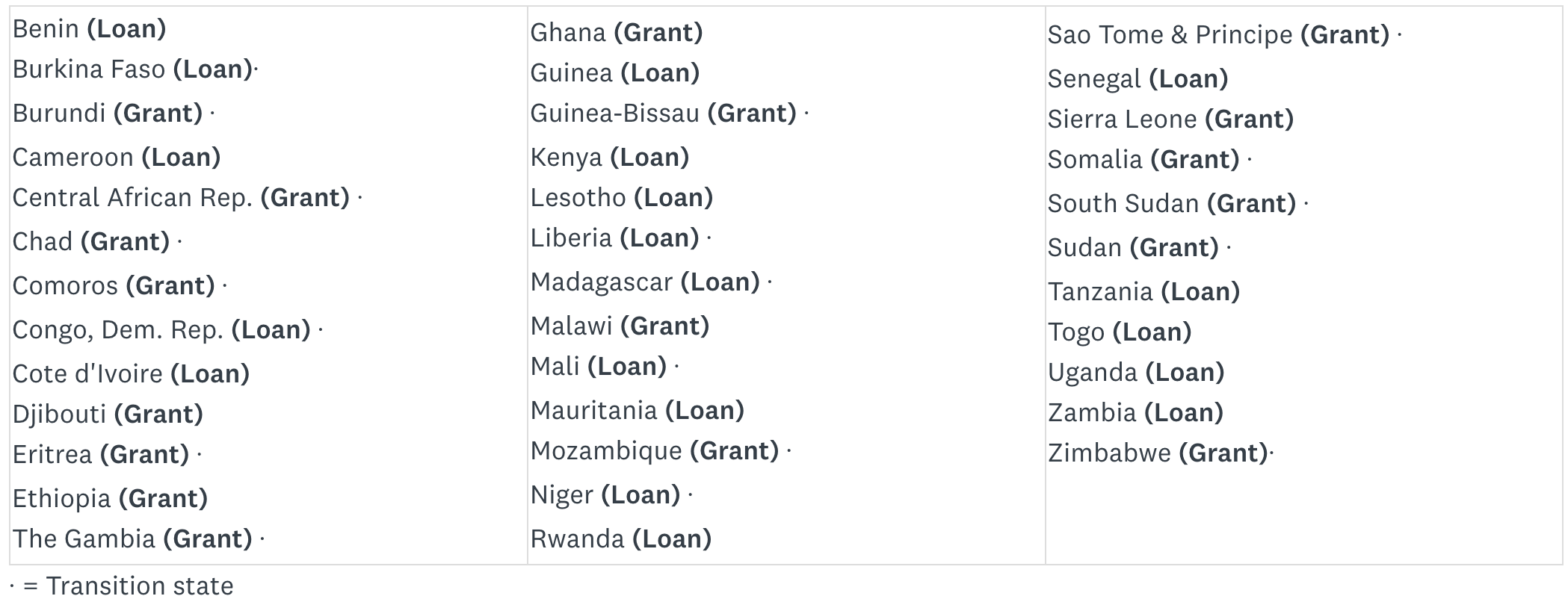
The list below provides the countries eligible for the TSF Prevention Envelope, along with their associated financing terms in 2023. It also highlights the countries identified by the AfDB as transition states under ADF-16.
The CfP promotes project proposals with a regional focus, particularly those involving transition states, allowing to foster holistic solutions and cross-border cooperation.
Project Proposal Requirements
The CfP prioritizes mature project proposals that clearly demonstrate positive impact and are designed to amplify the results of high-performing projects. Proposals should incorporate a fragility-sensitive theory of change; align with the ‘Do No Harm’ principle; and establish well-defined peacebuilding and conflict prevention objectives. Additionally, they should have the potential to drive meaningful results, facilitate transformative change, and significantly expand their impact.
Strong preference will be given to project proposals that are supported with formal request letters or evidence demonstrating the endorsement of beneficiary countries and alignment with the priorities of relevant national and/or regional priorities.
Particularly in insecure and challenging operating environments, including de facto situations, project proposals should outline potential risks, mitigation measures, and highlight how the proposed implementation arrangement will contribute to the long-term development of resilient, effective, and legitimate national institutions.
These requirements aim to ensure that the selected proposals not only deliver positive results but also maximize their potential and effectively prevent the root causes of fragility and conflict, making a lasting impact.
Funding and Resources
A total amount of UA 100 million (US$ 133 million / Euro 123 million) is made available for this 2024 CfP. Each project proposal can request up to UA 20 million (US$ 26.6 million / Euro 24.6 million), regardless of the number of beneficiary countries involved.
Priority will be given to project proposals that maximize impact by catalyzing public and/or private investments and leveraging additional funding from the AfDB’s other financial instruments and through external co-financing. Strong partnerships with multilateral institutions, bilateral financiers, government budgets, and private sector entities will be viewed favorably.
Applicants should clearly demonstrate how the requested support from the TSF complements and amplifies the mobilized resources, creating synergies that enhance the expected impact. Emphasizing the potential for scaling up the proposed projects and achieving transformative results will strengthen the proposal’s competitiveness and increase its chances for funding.
Selection Criteria
A selection process will evaluate proposals based on the following criteria to identify projects that have the potential to generate impactful results and effectively prevent fragility and conflict, promote resilience, and foster social cohesion and sustainable development.
Relevance to Fragility and Conflict - While aligning with the thematic areas, proposals should align with the objectives of the TSF Prevention Enveloppe and clearly contribute to building resilience and preventing the root causes of crises.
Impact and Transformative Potential - Proposals should showcase the potential for transformative change and have a significant impact on the target communities, institutions, and/or regions. It should outline clear result indicators that can be achieved, leading to sustainable development, peacebuilding, and inclusive growth.
Integrated and Community-based Solutions - Project proposals that adopt an integrated approach across the three thematic areas will receive priority consideration. Additionally, projects emphasizing a strong community-based approach to address fragility and conflict in border areas of hotspot regions will be viewed favorably. A successful proposal should highlight how the project promotes collaboration among multiple countries, leverages partnerships, and fosters regional stability and cooperation.
Sustainability and Scalability – A successful proposal should demonstrate a long-term vision and sustainability beyond the initial implementation phase. It should outline strategies for scaling up the project’s results and ensuring its continuation beyond the funding period.
Partnerships and Stakeholder Engagement - Proposals that emphasize partnerships and engagement with relevant stakeholders, including governments, regional organizations, civil society, private sector, and local communities, will be favored. The proposal should showcase the commitment and involvement of these stakeholders and their contributions to achieving the project’s anticipated results.
Financial Viability - A successful proposal should include a detailed budget and financial plan that demonstrates the efficient use of funds. It should also highlight any additional co-financing or leveraging of resources from other sources to maximize the project’s impact.
Monitoring and Evaluation - A successful proposal should outline a robust monitoring and evaluation framework to assess progress, measure results and ensure accountability. It should include clear and realistic indicators, data collection methods, and a plan for regular reporting on project performance.
Risk Assessment and Mitigation – The proposal should identify potential risks and challenges, including insecurity, associated with project implementation and outline effective strategies for risk management and mitigation. This includes addressing security concerns, ensuring transparency, and adhering to ethical and governance standards.
Application Process
Applications for this CfP are exclusive to Bank’s Task Managers interested in submitting project proposals. External applicants must coordinate with a relevant sectoral unit and Task Manager within the Bank to support and facilitate the submission and subsequent processing. Accordingly, a Task Manager can submit either an internal proposal on behalf of a Bank organizational unit, or an external proposal, representing an external partner. In all cases, submitted proposals will be subjected to the competitive evaluation process. Upon selection, the Task Manager will lead the preparation, appraisal and approval phases of the project and ensure supervision and completion during its implementation phase.
All project proposals must adhere to the standardized Preliminary Project Concept (PPC) format, capturing all information required in the application process. The application process involves the following considerations:
Online Application – The PPC should be submitted through the online Application System. The system provides a user-friendly platform for applicants to authenticate and enter their project proposal details. It is recommended to use the offline PPC template for preparation.
Saving Progress – Applicants have the option to save their incomplete proposals in the online Application System. This allows them to resume their work at their convenience.
Completeness – Applicants should ensure that all sections of the PPC are properly filled out and supported with relevant materials. Only fully completed proposals submitted online before the specified deadline will be considered during the evaluation and selection process.
User Guide – Applicants should refer to the User Guide for instructions and tips on navigating the system, completing the PPC, and attaching relevant documents. This guide facilitates a seamless submission process.
Consultation – Applicants are encouraged to seek strategic and technical guidance from the RDTS team during the proposal preparation process. To seek assistance or guidance, applicants can send an email to Transition Support Facility. Through its fragility expertise, RDTS can provide advisory support to help develop high-quality project proposals.
Timeline
The timeline of the CfP process is as follows:
Launch of the CfP: May 10, 2024
Application Deadline: August 10, 2024
Announcement of Selection Results: Mid-September 2024
Applicants are advised to take note of these dates and ensure that their project proposals are submitted within the specified timeframe. Following the closure of the selection process, the results will be ly disclosed to applicants, providing them with timely information on the outcome of their submissions.
Prevention Envelope of the Transition Support Facility (TSF)
The Transition States Coordination Office (RDTS) of the African Development Bank Group (AfDB) is pleased to announce the launch of the second Call-for-Proposals (CfP) of the Prevention Envelope of the Transition Support Facility (TSF) introduced under the sixteenth replenishment cycle of the African Development Fund (ADF-16).
Overview of the TSF Prevention Envelope
The Prevention Envelope represents an important shift in the TSF funding strategy, aligning with the AfDB’s 2022-2026 Strategy for Addressing Fragility and Building Resilience in Africa. It adopts a results-driven approach that focuses on preventive interventions to address fragility and conflict, aiming for scaled up results and greater impact for lasting resilience. By addressing root causes proactively, the approach emphasizes the importance of preventing crises rather than responding to them. It takes a comprehensive, long-term perspective and promotes partnerships for integrated and regional solutions that leverage different sources of funding and financial instruments. Through this approach, the AfDB seeks to maximize the impact of its resources and support transformative change in vulnerable institutions, communities, and economies
This CfP aims to foster partnerships and finance innovative high-impact projects across the thematic areas at the humanitarian-development-peace nexus, both to scale up results and fund new initiatives to prevent fragility promote lasting peace and resilience in Africa. The CfP will also seek to equip countries with requisite all-round capacities and resources and support them ease pressures from drivers of fragility and build resilience and stability for long-term sustainable development.
The 2023 Revised Operational Guidelines of the TSF provide a comprehensive overview of the operational modalities of the Prevention Envelope, and the following elements further specify key features for successful project proposals under this CfP.
Key Themes and Priorities
The CfP under the TSF Prevention Envelope focuses on three strategic thematic areas :
Gender Equality, Women’s Empowerment, and Youth Employment This thematic area aligns with the AfDB’s 2021-2025 Gender Strategy and the AfDB’s Jobs for Youth in Africa Strategy and recognizes the catalytic effect of gender equality, women’s empowerment, and youth employment in building social cohesion and creating the conditions for lasting peace and resilience, in support of the Women, Youth Peace and Security agenda. Proposals should focus on scaling up gender-marked interventions and enhancing access to productive resources, financial services, markets, and entrepreneurship opportunities for women and youth. This can be achieved through skills development, capacity building, and support for women and youth-owned businesses. Additionally, proposals can address gender-based violence and discrimination through awareness campaigns, legal reforms, and support services. The promotion of active participation of women and youth in decision-making processes can be integrated in proposals through training, mentorship, and advocacy. A key consideration is to integrate a gender perspective in all project aspects and prioritize investments in data collection and knowledge generation on gender and youth. These efforts are crucial to inform evidence-based decision-making and enable the development of targeted interventions.
Climate Change Adaptation and Mitigation This thematic area aligns with the AfDB’s 2022-2026 Climate Change and Green Growth Strategic Framework, acknowledging the climate-security nexus. Proposals are encouraged to create synergies with other internal instruments such as the AfDB’s Climate Action Window (CAW), mobilize additional climate finance from external sources, and scale up the results of high-performing existing climate-related investments. Priority should be given to measures that enhance resilience to shocks, promote climate change adaptation and climate-smart agriculture, green infrastructure, renewable energy, and ecosystem restoration and biodiversity conservation. It is essential to integrate climate change considerations throughout the project cycle, adopt innovative approaches, facilitate technology transfer, and invest in capacity building to strengthen climate resilience. Support should be directed towards investments that bolster climate-robustness and preparedness in sectors such as agriculture, road transport, land use, biodiversity and ecosystems, water, health, and human settlements, as well as those that accelerate progress towards food security and sustainable livelihoods. Active engagement with local communities, enhancing institutional capacity, and fostering sustainable and inclusive economic growth are pivotal components in effectively addressing climate-related challenges.
Catalyzing Private Sector DevelopmentThis thematic area aligns with the AfDB’s 2021-2025 Private Sector Development (PSD) Strategy and emphasizes the importance of upstream and midstream activities to unlock the potential of private sector growth. It complements the AfDB’s risk participation and investments in both public and private projects. Proposals under this area should promote innovative approaches to support private sector activities, such as facilitating pipeline development and capacity building of local businesses. They should also seek to enhance investments through other Development Finance Institutions (DFIs) and private investors and promote platforms for investment and reform in alignment with the African Continental Free Trade Area (AfCFTA). Additionally, proposals should prioritize supporting entrepreneurship, innovation, and business linkages, providing capital and expertise to start-ups, and fostering partnerships with financial intermediaries and financing platforms. It is essential for proposals to integrate measures that address challenges in the business environment, enabling ease of start-up and overcoming regulatory bottlenecks for existing businesses specially for SMEs.
These themes have been chosen in consultation with ADF shareholders in view of their importance for addressing fragility and building resilience in eligible countries, as they have a significant impact potential in leveraging results for preventing the root causes of fragility and conflict. Proposals should explicitly prioritize prevention and adopt a human-centered and community-based approach. Special attention should be given to vulnerable groups, including forcibly displaced populations and host communities, who are most affected by fragility and conflict. The targeted project area and beneficiaries should therefore clearly respond to these priorities.
These themes are mutually reinforcing, aligned with the AfDB’s strategic frameworks, and emphasize holistic approaches to achieve lasting resilience and stability. In this context, this CfP encourages project proposals to adopt an integrated design that addresses these themes collectively, particularly at the nexus of climate, gender, youth, and private sector, with an explicit intention of addressing fragility and building resilience.
Eligible Financial Instruments
Resources from the TSF Prevention Envelope can be implemented through the full range of financial instruments available under the ADF, ranging from sovereign investment operations to program-based operations and guarantees. To achieve synergies and maximize results, it is also encouraged to consider a combination of different instruments that encompass direct investments, accompanying reforms, and institutional capacity building, aiming for comprehensive and holistic results.
Country Eligibility
The TSF Prevention Envelope offers merit-based support to all ADF-eligible countries. This inclusive and results-driven approach aims to comprehensively address fragility risks and prioritize operations that effectively prevent hotspots of conflict and fragility.
The list below provides the countries eligible for the TSF Prevention Envelope, along with their associated financing terms in 2023. It also highlights the countries identified by the AfDB as transition states under ADF-16.
The CfP promotes project proposals with a regional focus, particularly those involving transition states, allowing to foster holistic solutions and cross-border cooperation.
Project Proposal Requirements
The CfP prioritizes mature project proposals that clearly demonstrate positive impact and are designed to amplify the results of high-performing projects. Proposals should incorporate a fragility-sensitive theory of change; align with the ‘Do No Harm’ principle; and establish well-defined peacebuilding and conflict prevention objectives. Additionally, they should have the potential to drive meaningful results, facilitate transformative change, and significantly expand their impact.
Strong preference will be given to project proposals that are supported with formal request letters or evidence demonstrating the endorsement of beneficiary countries and alignment with the priorities of relevant national and/or regional priorities.
Particularly in insecure and challenging operating environments, including de facto situations, project proposals should outline potential risks, mitigation measures, and highlight how the proposed implementation arrangement will contribute to the long-term development of resilient, effective, and legitimate national institutions.
These requirements aim to ensure that the selected proposals not only deliver positive results but also maximize their potential and effectively prevent the root causes of fragility and conflict, making a lasting impact.
Funding and Resources
A total amount of UA 100 million (US$ 133 million / Euro 123 million) is made available for this 2024 CfP. Each project proposal can request up to UA 20 million (US$ 26.6 million / Euro 24.6 million), regardless of the number of beneficiary countries involved.
Priority will be given to project proposals that maximize impact by catalyzing public and/or private investments and leveraging additional funding from the AfDB’s other financial instruments and through external co-financing. Strong partnerships with multilateral institutions, bilateral financiers, government budgets, and private sector entities will be viewed favorably.
Applicants should clearly demonstrate how the requested support from the TSF complements and amplifies the mobilized resources, creating synergies that enhance the expected impact. Emphasizing the potential for scaling up the proposed projects and achieving transformative results will strengthen the proposal’s competitiveness and increase its chances for funding.
Selection Criteria
A selection process will evaluate proposals based on the following criteria to identify projects that have the potential to generate impactful results and effectively prevent fragility and conflict, promote resilience, and foster social cohesion and sustainable development.
Relevance to Fragility and Conflict - While aligning with the thematic areas, proposals should align with the objectives of the TSF Prevention Enveloppe and clearly contribute to building resilience and preventing the root causes of crises.
Impact and Transformative Potential - Proposals should showcase the potential for transformative change and have a significant impact on the target communities, institutions, and/or regions. It should outline clear result indicators that can be achieved, leading to sustainable development, peacebuilding, and inclusive growth.
Integrated and Community-based Solutions - Project proposals that adopt an integrated approach across the three thematic areas will receive priority consideration. Additionally, projects emphasizing a strong community-based approach to address fragility and conflict in border areas of hotspot regions will be viewed favorably. A successful proposal should highlight how the project promotes collaboration among multiple countries, leverages partnerships, and fosters regional stability and cooperation.
Sustainability and Scalability – A successful proposal should demonstrate a long-term vision and sustainability beyond the initial implementation phase. It should outline strategies for scaling up the project’s results and ensuring its continuation beyond the funding period.
Partnerships and Stakeholder Engagement - Proposals that emphasize partnerships and engagement with relevant stakeholders, including governments, regional organizations, civil society, private sector, and local communities, will be favored. The proposal should showcase the commitment and involvement of these stakeholders and their contributions to achieving the project’s anticipated results.
Financial Viability - A successful proposal should include a detailed budget and financial plan that demonstrates the efficient use of funds. It should also highlight any additional co-financing or leveraging of resources from other sources to maximize the project’s impact.
Monitoring and Evaluation - A successful proposal should outline a robust monitoring and evaluation framework to assess progress, measure results and ensure accountability. It should include clear and realistic indicators, data collection methods, and a plan for regular reporting on project performance.
Risk Assessment and Mitigation – The proposal should identify potential risks and challenges, including insecurity, associated with project implementation and outline effective strategies for risk management and mitigation. This includes addressing security concerns, ensuring transparency, and adhering to ethical and governance standards.
Application Process
Applications for this CfP are exclusive to Bank’s Task Managers interested in submitting project proposals. External applicants must coordinate with a relevant sectoral unit and Task Manager within the Bank to support and facilitate the submission and subsequent processing. Accordingly, a Task Manager can submit either an internal proposal on behalf of a Bank organizational unit, or an external proposal, representing an external partner. In all cases, submitted proposals will be subjected to the competitive evaluation process. Upon selection, the Task Manager will lead the preparation, appraisal and approval phases of the project and ensure supervision and completion during its implementation phase.
All project proposals must adhere to the standardized Preliminary Project Concept (PPC) format, capturing all information required in the application process. The application process involves the following considerations:
Online Application – The PPC should be submitted through the online Application System. The system provides a user-friendly platform for applicants to authenticate and enter their project proposal details. It is recommended to use the offline PPC template for preparation.
Saving Progress – Applicants have the option to save their incomplete proposals in the online Application System. This allows them to resume their work at their convenience.
Completeness – Applicants should ensure that all sections of the PPC are properly filled out and supported with relevant materials. Only fully completed proposals submitted online before the specified deadline will be considered during the evaluation and selection process.
User Guide – Applicants should refer to the User Guide for instructions and tips on navigating the system, completing the PPC, and attaching relevant documents. This guide facilitates a seamless submission process.
Consultation – Applicants are encouraged to seek strategic and technical guidance from the RDTS team during the proposal preparation process. To seek assistance or guidance, applicants can send an email to Transition Support Facility. Through its fragility expertise, RDTS can provide advisory support to help develop high-quality project proposals.
Timeline
The timeline of the CfP process is as follows:
Launch of the CfP: May 10, 2024
Application Deadline: August 10, 2024
Announcement of Selection Results: Mid-September 2024
Applicants are advised to take note of these dates and ensure that their project proposals are submitted within the specified timeframe. Following the closure of the selection process, the results will be ly disclosed to applicants, providing them with timely information on the outcome of their submissions.